
On the night of August 28, 1972, at two-thirty in the morning, an ambulance arrived at the marine biology laboratory of the University of Edinburgh carrying a large metal container sealed with steel locks. Inside was something weighing 340 kilograms and measuring four and a half meters in length — something recovered from the bottom of Loch Ness just nine hours earlier. Professor Robert Rines, who was waiting at the laboratory door, instructed the drivers to move with absolute speed and complete silence. He wanted no one to know what had arrived that night, because what was inside the container — if proved genuine — would overturn the entire field of biology. There was a carcass of a creature that was not supposed to exist. But when the dissection team arrived the following morning, the container was open and the carcass was gone. No trace of it remained. No blood on the floor, no signs of forced entry — only the empty container and the locks broken from the inside. The security camera recordings for that night had been wiped entirely, not just the hours during which the carcass disappeared but the entire week before and after. When Rines attempted to file an official police report, his request was refused on the grounds that no physical evidence of any carcass existed in the first place. Three days later, Professor Rines resigned from his position, relocated to a remote village in northern Scotland, and refused to speak about that night for the next thirty years until his death.
The Lake That Has Hidden a Secret for 1,500 Years
Loch Ness is the second deepest lake in Scotland, reaching a depth of 230 meters and containing more water than all the lakes of England and Wales combined. Visibility beneath its surface is nearly zero due to suspended peat particles that render the water permanently opaque — making it the ideal environment for concealing almost anything. The earliest historical record of an unusual creature within it dates to 565 CE, when Saint Columba wrote in his journal of a water beast that attacked one of his followers, and of how he drove it away through prayer. But documented incidents began accumulating with alarming frequency from the 1930s onward. In 1933 alone, fifty-two formal sighting reports were recorded — most from individuals with no connection to one another and no apparent motive for fabrication, among them a police officer, two engineers, a veterinarian, and a nun. What is most striking is not the volume of sightings but the consistency of the descriptions. Nearly all of them reported a creature between six and eight meters in length with a long neck, a small head, and paddle-like fins or limbs, moving with a vertical undulation rather than the horizontal motion of fish. This specific profile led several paleontologists to suggest the animal might belong to an extinct group known as plesiosaurs — marine reptiles of the dinosaur era, extinct for 65 million years. Which raises an even more disturbing question: how does an entire species survive a mass extinction event and conceal itself in a single lake across millions of years without detection — and if one lives in Loch Ness, how many others inhabit deeper, more remote bodies of water that science has not yet examined?
The Photograph That Terrified the World — Then Was Declared a Hoax
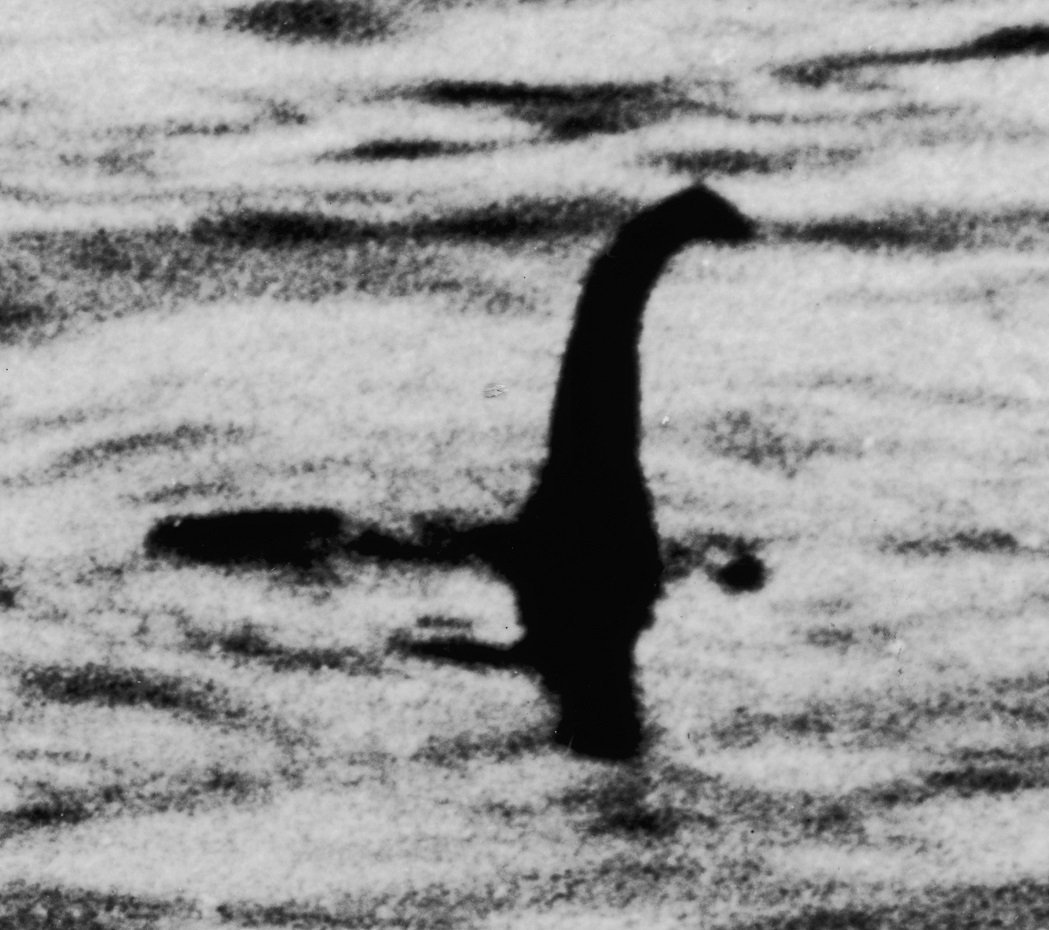
On April 19, 1934, the Daily Mail published a photograph taken by a respected surgeon named Robert Kenneth Wilson, showing what appeared to be a long neck and small head rising from the surface of the lake. The image, known ever since as the Surgeon’s Photograph, became the most famous image in the history of Loch Ness and perhaps in the history of unexplained creatures altogether. Then in 1994, exactly sixty years later, a man named Christian Spurling confessed on his deathbed that the photograph was a fabrication, constructed using a toy submarine fitted with a wooden neck. His confession was detailed and appeared convincing, and most scientists treated the matter as definitively closed. But there is a detail rarely mentioned: Spurling was ninety years old when he confessed and was in the advanced stages of dementia, and when pressed on specific technical questions about constructing the model, his answers contradicted each other directly. More significantly, twenty-six pages of the Daily Mail’s 1994 investigation into the confession were never published. The newspaper described them as supplementary material of no public interest — but when an independent researcher named Gary Campbell requested access to them, his request was refused under laws protecting journalistic sources. Campbell, who has maintained the official Loch Ness sightings register since 1996, documents more than 1,100 recorded sightings with names, dates, and precise locations attached. At least 18 percent of them involve multiple witnesses who observed the same phenomenon simultaneously from different vantage points. Seven were made by police officers or soldiers on active duty — individuals with every professional reason not to fabricate accounts that could end their careers. The question the official scientific position has never adequately answered is why all of this testimony should be classified as collective hallucination or misidentification of ordinary animals.
The Experiment Whose Results Were Never Published
In the summer of 2003, the BBC launched a large-scale investigation called Operation Deep Scan, deploying 600 independent sonar units to cover every section of the lake, with a team of fifty scientists and marine biology specialists. The project was designed to be definitive — either confirming the existence of an unknown large creature or eliminating the possibility permanently. After two weeks of intensive scanning, the BBC announced its findings: nothing unusual had been detected, no monster, no unknown large organism. The case was closed. But one member of the scientific team, named Ian Florence, resigned one month after the project ended, and in his resignation letter wrote a single baffling sentence: “I cannot be part of a science that denies what it saw with its own eyes.” The letter was partially published in a local newspaper, but its full contents were never disclosed. More troubling still, forty-seven hours of sonar recordings captured by the team were never released to the public. The BBC described them as routine technical data of no interest to general audiences — but when several independent researchers submitted Freedom of Information requests for access, they were refused on the grounds that the recordings were the BBC’s private intellectual property. In 2016, an internal BBC document surfaced online suggesting that twelve minutes of those sonar recordings had captured a large object moving at unusual speed at a depth of 180 meters. The document was removed from the internet six hours after its appearance and was never re-posted. Whether it was genuine or fabricated, no one has established.
The DNA That Confused the Scientists
In September 2019, New Zealand geneticist Neil Gemmell announced the results of the most comprehensive environmental DNA study ever conducted in Loch Ness. His team collected 250 water samples from varying depths and locations throughout the lake and analyzed every biological trace present in them. The principle is straightforward: any living organism sheds genetic material into the water surrounding it. After fourteen months of analysis, Gemmell announced his findings at a press conference attended by eighty journalists from seventeen countries. No evidence of any large unknown animal had been found — no plesiosaur, no unknown shark, no unregistered large organism of any kind. The story circulated globally as the definitive scientific proof that the Loch Ness Monster was mythology. But on page 43 of the scientific report published in the journal Nature, in a paragraph that almost no one noticed, the team acknowledged finding eighteen genetic sequences that could not be matched to any known organism in the world’s biological databases. Gemmell described them as likely belonging to known animals whose DNA had simply not yet been catalogued, or possibly as sample contamination, but then added a phrase that was never subsequently discussed in any public statement: some of these sequences showed an unexpected similarity to extinct marine reptiles, though no definitive conclusions could be drawn. The subject was not raised again. When other researchers later requested access to those eighteen samples for independent reanalysis, they were told the samples had been fully consumed during the original testing. There is currently no way to verify those anomalous sequences, and no new sampling of the same locations has been undertaken in the five years since the paper was published.
The Secret That May Never Be Solved
Loch Ness now receives more than 400,000 visitors annually, drawn by the possibility of catching a glimpse of the legendary creature. The tourism industry generates 80 million dollars for the region each year. And perhaps this is precisely what makes Scottish authorities careful to keep the legend alive without ever allowing definitive resolution — because the legend generates revenue, while the truth, whichever direction it runs, generates consequences. Perhaps this explains why every serious scientific investigation of the lake ends with ambiguous findings, missing documents, or researchers who quietly exit the field. The question that will not close is this: why, after more than a century of sightings, multiple large-scale scientific investigations, and an environmental DNA study covering the entire lake, does not a single piece of conclusive evidence exist in either direction? Perhaps because the lake is deeper and larger than any current technology fully accommodates. Perhaps because whatever lives within it is more adept at concealment than any search methodology designed so far. Or perhaps because there are parties for whom the continued absence of a definitive answer serves a purpose that the presence of one would not. And what if the carcass that arrived at the Edinburgh laboratory on that August night in 1972 was real? What if its disappearance was not an ordinary theft but an organized operation to eliminate evidence that would have rewritten the natural history of the planet? No one knows. No one is close to knowing. And that may be the largest secret Loch Ness holds in its dark water — one that may remain buried beneath 230 meters of black lake forever, or until the day someone decides the time for keeping it has finally passed.